



© 2025 DiscoverTheState.com. All rights reserved. Powered by DiscoverTheState.com


Why This Market Shift Matters More Than Prices
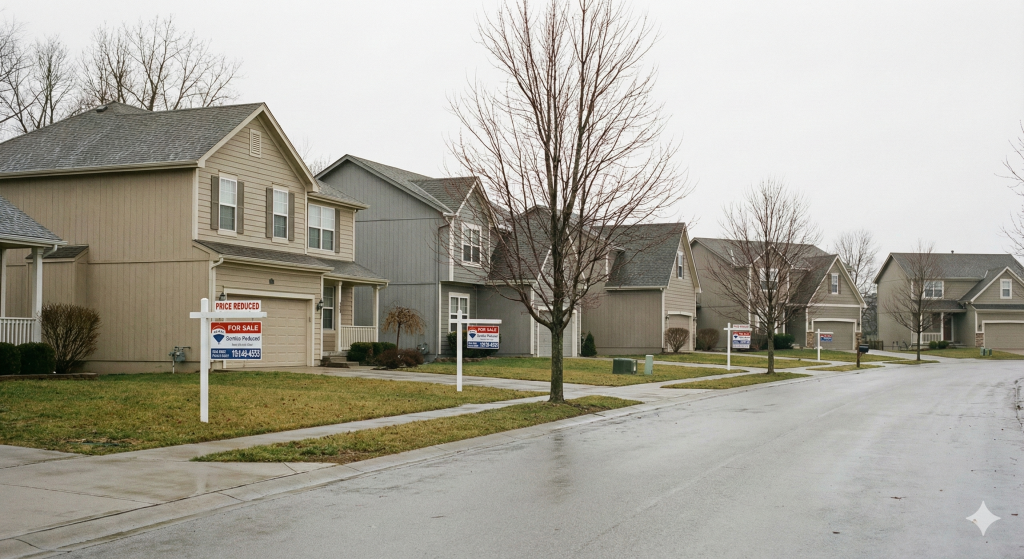
The homes sitting longer housing market 2025 story is not about collapsing prices.
Homes still look fine. Photos are polished. Prices appear stable.
However, behavior underneath has changed.
Listings linger. Conversations stall. Urgency fades. This is not fear or panic. Instead, it is a structural shift in how buyers and sellers behave when time becomes visible again. When time stretches, leverage moves quietly—long before price charts react.
Key Warning Signals in the Homes Sitting Longer Housing Market 2025
Time is the signal most people ignore.
In fast markets, time disappears. Homes sell quickly, and speed feels like proof of value. When speed slows, perception flips. Buyers stop assuming demand and start asking questions.
Longer days on market quietly create three effects:
• Buyers gain optionality
• Sellers lose urgency-driven leverage
• Deals fail later instead of earlier
This is why markets can soften without collapsing. Behavior changes first. Price follows later.
We’ve seen similar early signals before, including inventory slowdowns discussed in our housing market risk analysis:
https://discoverthestate.com/housing-market-risk/
External data supports this shift. According to the Redfin Data Center, days on market have risen across many metros even where prices remain sticky:
https://www.redfin.com/news/data-center/
Why Time Does the Real Work in Housing Markets
Time is not passive. It compounds meaning.
A home on day five feels different than the same home on day forty. Nothing changed physically. Perception did.
As days pass:
Curiosity becomes comparison.
Comparison becomes negotiation.
Negotiation becomes leverage.
Buyers learn they can wait safely. Once buyers learn that lesson, urgency does not return easily. This is the quiet engine behind the homes sitting longer housing market 2025 shift.
How Buyers Change First When Homes Sit Longer

Buyers adapt before sellers notice.
Instead of rushing, buyers revisit homes. They measure rooms. They compare payments. They stress-test scenarios. Taxes, insurance, maintenance, and exit risk matter again.
Emotion gives way to evaluation.
Buyers stop asking, “Do I love it?”
They start asking, “Does this hold up?”
This retraining is powerful because it sticks. Even if prices do not fall, leverage has already moved. Buyers negotiate terms, not just price. Walking away feels safe, not risky.
How Sellers Lose Leverage Through Time, Not Price
Sellers rarely lose on price first. They lose on time.
The first week matters most. Early traction signals strength. When that window passes, silence becomes information. Buyers begin asking why no one else committed.
Small price cuts feel proactive. However, buyers often interpret them as resistance, not flexibility. Time keeps working in the background, eroding certainty.
This is the invisible “time tax.” It does not show up in comps, but it shapes outcomes.
For sellers tracking similar patterns, our breakdown of slowing seller leverage explains this dynamic further:
https://discoverthestate.com/seller-leverage-housing-market/
Why Deals Now Fail Later in the Process
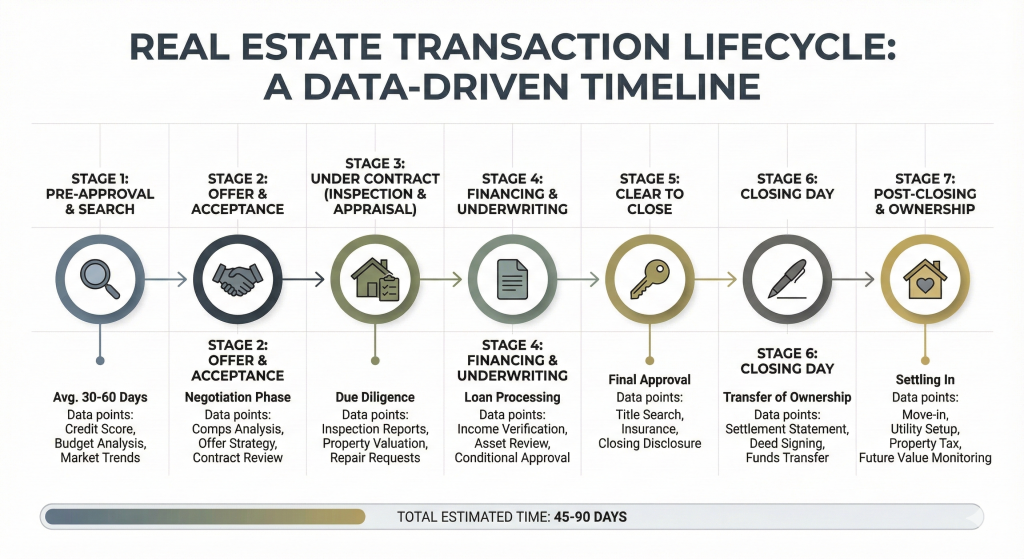
In a time-heavy market, deals still get offers. However, they fail later.
Lenders slow down.
Appraisers notice extended exposure.
Buyers keep contingencies intact.
Requests for credits, repairs, and concessions increase. Buyers do not threaten. They present math. When alignment fails, deals dissolve quietly during verification.
This is how liquidity erodes without headlines.
The Federal Reserve’s rate data shows financing pressure remains part of this equation, but behavior amplifies it:
https://fred.stlouisfed.org/
What This Means for Buyers
For buyers, the homes sitting longer housing market 2025 creates clarity.
Patience becomes leverage.
Verification replaces urgency.
Walking away protects optionality.
This is not hesitation. It is control.
Buyers who understand time stop overpaying for speed that no longer exists.
What This Means for Sellers
For sellers, delay is costly.
Pricing must match the moment, not the memory. Transparency matters more than optimism. Sellers who adjust early preserve credibility and cleaner outcomes.
Markets do not punish hope. They punish waiting.
What This Means for Investors
Investors benefit from time-heavy markets if they stay disciplined.
More data accumulates. Mispricing becomes visible. Risk is easier to model. Operators who understand cycles let the market reveal itself instead of forcing action.
This is consistent with broader affordability and risk trends we’ve tracked nationwide:
https://discoverthestate.com/us-housing-affordability-risk/
Final Takeaways: Why Time Changed the Market First
Homes are sitting longer because behavior matured, not because homes broke.
Time moved first. Price will respond later.
This is not a crash narrative. It is a behavioral reset. Markets driven by evaluation move slower, but they become more readable. Those who understand time stop reacting and start choosing deliberately.
This content is for educational purposes only and not financial or legal advice.
👉 Watch the full video breakdown on our Discover the State YouTube channel for a deeper behavioral walkthrough of this shift.
FAQ: Homes Sitting Longer Housing Market 2025
Is the housing market crashing in 2025?
No. Homes sitting longer reflects a behavioral shift, not panic. Prices often move later.
Why do days on market matter more than price right now?
Time changes perception first. It shifts leverage before price adjustments appear.
Is it a good time to buy in the 2025 housing market?
For prepared buyers, yes. Patience and verification offer advantages.
How do sellers avoid losing leverage as homes sit longer?
Price for momentum early, offer transparency, and respond to current behavior.
Will urgency return soon?
Not easily. Once buyers learn waiting works, patience becomes the baseline.
No Comments