



© 2025 DiscoverTheState.com. All rights reserved. Powered by DiscoverTheState.com


Why Texas feels “off” in 2025
You don’t need a headline to feel the shift. In overbuilt Texas cities 2025, the street-level energy changed first. Open houses feel quieter. New-build cul-de-sacs look busy on marketing signs, but not in the driveway.
Meanwhile, listings that used to disappear now sit. Then they reappear with “price improvement.” That is not drama. That’s demand cooling in real time.
Texas still has jobs, growth, and migration. However, the market runs on the monthly payment—not the narrative. And in some corridors, the monthly finally crossed the affordability line.
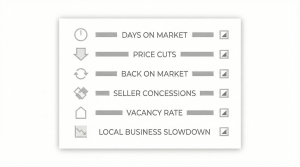
Key warning signals in overbuilt Texas cities 2025
When I say “overbuilt,” I’m not saying Texas is empty. I’m saying supply, demand, and affordability stopped syncing. Watch these measurable signals:
-
Days on market rising versus last year
-
Inventory stacking instead of clearing month-to-month
-
More price cuts, including second and third reductions
-
Back-on-market listings after inspection or financing issues
-
Concessions becoming standard (closing costs, rate buydowns, repairs)
-
Payment-to-income mismatch (PITI + taxes + insurance + HOA + utilities)
If you want to benchmark your ZIP, use national dashboards like the Redfin Data Center (https://www.redfin.com/news/data-center/) and Zillow Research / ZHVI (https://www.zillow.com/research/). For rates, track the 30-year fixed mortgage series on FRED (https://fred.stlouisfed.org/series/MORTGAGE30). For broader price trends, keep an eye on the FHFA House Price Index (https://www.fhfa.gov/data/hpi).
Countdown: 7 Texas cities where overbuilding meets payment reality
These aren’t “bad cities.” They’re markets where builders pushed supply hard, and today’s payment environment is forcing a repricing.
#7 – New Braunfels: boomtown inventory meets budget ceilings
New Braunfels rode the I-35 corridor story perfectly: lifestyle, growth, and proximity to Austin/San Antonio. Builders responded fast. In 2025, the tape looks different.
You’ll see more listings sitting longer, especially for similar floor plans in the same band. As a result, buyers ask the quiet question: “If this is still hot, why is it still available?”
#6 – Conroe: “lake life” is still real, but the monthly is louder
Conroe still photographs well. However, bigger houses come with bigger taxes and insurance. HOA dues don’t drop, and commutes don’t feel “cheap” anymore.
In practice, sellers and builders lean into incentives to keep deals alive. When incentives rise, urgency falls.
#5 – Forney: starter-home positioning, move-up pricing
Forney became a pressure valve for Dallas buyers during the boom. Developers scaled phases quickly. That worked when cheap money made the monthly feel manageable.
Now, resale sellers compete directly with new inventory down the street. Meanwhile, buyers can cross-shop, negotiate, or wait—so listings age.
#4 – Leander: tech halo, real-world affordability
Leander benefited from Austin’s growth narrative for years. The demand is still there, but it’s more selective.
Higher HOA, higher taxes, and higher rates create a heavier carrying cost. Therefore, buyers underwrite more carefully and don’t rush just because the ZIP code is popular.
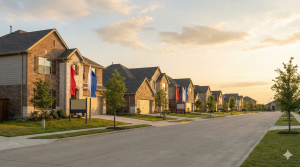
#3 – Katy: strong brand, tougher math
Katy’s schools and community infrastructure still carry weight. Yet buyers now price the entire lifestyle cost: commute, insurance, taxes, and everything that hits the monthly.
So you see a “soft ceiling.” Buyers say, “We like it—just not at that number.” That’s how cooling starts in a name-brand suburb.
#2 – San Marcos: the squeezed middle of the corridor
San Marcos sits between two major magnets. Builders and investors acted accordingly.
In 2025, the mismatch shows up when rents don’t justify acquisition costs, and first-time buyers pause at the payment. You’ll often see more price reductions and more back-on-market events in the same pockets.
#1 – Austin: not dead—just repricing where speculation ran hottest
Austin is still Austin. However, parts of the market that relied on momentum are learning what “normal” demand looks like.
Investor-heavy corridors, some condo segments, and fringe new-build pockets face more competition and fewer urgent buyers. As a result, sellers negotiate more, and pricing becomes more sensitive.
If you want a broader “Texas demand is fading” map, pair this article with our related breakdown: 10 Overpriced Texas Cities 2025: Where Demand Is Dying (https://discoverthestate.com/10-overpriced-texas-cities-2025-where-demand-is-dying/) and No One Is Moving to These Overpriced Texas Cities Anymore (https://discoverthestate.com/no-one-is-moving-to-these-overpriced-texas-cities-anymore/).
What this means for buyers
Your advantage in 2025 is not speed. It’s structure.
-
Build a watchlist of homes sitting 21, 30, 45+ days, especially after a second cut.
-
Keep inspection and financing contingencies. This is not 2021.
-
Ask for concessions like they are normal—because they are normal in softer pockets.
-
Run a five-year “all-in monthly” model: mortgage + taxes + insurance + HOA + utilities + realistic maintenance.
If the deal only works after financial gymnastics, it doesn’t work. Walking away is a professional decision.
For pattern recognition across states, compare what’s happening in Texas to our U.S. Suburbs Turning Into Housing Ghost Towns in 2025 analysis (https://discoverthestate.com/u-s-suburbs-turning-into-housing-ghost-towns-in-2025/) and Top 10 Cities in Arizona Where Buyer Demand Has Collapsed in 2025 (https://discoverthestate.com/top-10-cities-in-arizona-where-buyer-demand-has-collapsed-in-2025/).

What this means for sellers
The market is not “against you.” But it will punish denial.
-
Price to what is closing now, not what peaked in 2022.
-
Do a pre-inspection to convert surprises into known line items.
-
Lead with a clear incentive package early instead of slow public price cuts.
-
Compete with builders directly if you’re in a new-build heavy corridor.
The goal is to control the narrative and reduce buyer friction. That’s how you keep leverage.
What this means for investors
2025 is a stress test. Treat it like one.
-
Underwrite conservative rent growth.
-
Assume taxes and insurance stay sticky.
-
Treat HOA dues as a rising-cost variable, not a fixed line item.
-
Buy only when the asset pays you to hold it—even if prices nap for five years.
For a parallel investor reality check, see Nevada Housing Market Faces Major Correction — Here’s Where It Hits Hardest (https://discoverthestate.com/nevada-housing-market-faces-major-correction-heres-where-it-hits-hardest/) and Georgia Housing Crash Alert – 10 Metro Cities Where Bidding Wars Died Overnight (https://discoverthestate.com/georgia-housing-crash-alert-10-metro-cities-where-bidding-wars-died-overnight/).
Final takeaways and conclusion
Texas isn’t “over.” The state still has growth engines. However, overbuilt Texas cities 2025 are forcing a repricing where the story ran ahead of what households can actually carry.
If you’re buying, win with patience and underwriting. If you’re selling, win with realism and clean incentives. If you’re investing, win with cash-flow discipline—not hope.
This article is educational only and is not financial, tax, or legal advice. Always do your own research and consult licensed professionals.
Watch the full video breakdown on our Discover the State YouTube channel.
FAQ: Overbuilt Texas Cities 2025
Q1: What does “overbuilt Texas cities 2025” actually mean?
It means supply expanded faster than qualified demand at today’s payments. You’ll usually see higher DOM, more incentives, and more price cuts in the same corridors.
Q2: Is 2025 a good time to buy in overbuilt Texas cities?
It can be—if you buy like an underwriter. Target listings sitting 30–45+ days, keep contingencies, and negotiate credits or rate buydowns so the monthly makes sense.
Q3: Which indicators should I track weekly in my Texas suburb?
Track days on market, price-cut share, active inventory, and back-on-market events. Cross-check with Redfin Data Center and Zillow Research, then confirm what you see locally.
Q4: How do sellers compete with builders in 2025 Texas markets?
Lead with certainty: pre-inspection, clean documentation, realistic pricing, and a clear incentive package. Tiny price cuts over time usually signal weakness and train buyers to wait.
Q5: What’s the biggest investor mistake in overbuilt Texas cities 2025?
Buying on appreciation expectations instead of cash flow. If the property doesn’t pay you to hold it after taxes, insurance, HOA, and maintenance, it’s speculation—no matter how good the story sounds.
No Comments